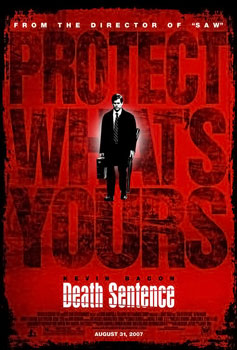
James Wan’s follow
up to his breakout, Saw, comfortably wears the generic trappings of the
neo-fascist revenge fantasy, à la Death Wish (of which Death Sentence incidentally shares a title with
its literary sequel). You know the score, Kevin Bacon’s Nick Hume has a snazzy
job and he lives in a big house with his great family (we know they’re great
because we see home video footage of them) until one day his son is killed with
a machete. Why do bad thinks happen to great people? A bit of crying on the
floor/in the shower/back on the floor later and Bacon is ready to shoot some
street punks with guns. It’s not a great film.
 But - and it’s a
big, Nicki Minaj-esque, surgically enhanced ‘but’ - it has one of the greatest
action set-pieces of the last decade. A mid-film foot chase through back alleys
leads into a bravura one shot tracking sequence through a multi-story car park
that culminates with a crunchy, money shot death. It’s such a dynamic,
meticulous, thrilling sequence that it goes to show just how well Wan ‘gets’
the nuts and bolts mechanics of a thriller. Like Michael Mann or the crème of
the Korean thriller scene the action is the drama and vice versa. Admittedly, it’s
an incredibly showy sequence but boy does it pay off, casting the rest of the
film in a blindingly favourable light.
But - and it’s a
big, Nicki Minaj-esque, surgically enhanced ‘but’ - it has one of the greatest
action set-pieces of the last decade. A mid-film foot chase through back alleys
leads into a bravura one shot tracking sequence through a multi-story car park
that culminates with a crunchy, money shot death. It’s such a dynamic,
meticulous, thrilling sequence that it goes to show just how well Wan ‘gets’
the nuts and bolts mechanics of a thriller. Like Michael Mann or the crème of
the Korean thriller scene the action is the drama and vice versa. Admittedly, it’s
an incredibly showy sequence but boy does it pay off, casting the rest of the
film in a blindingly favourable light.
Amorous gushing
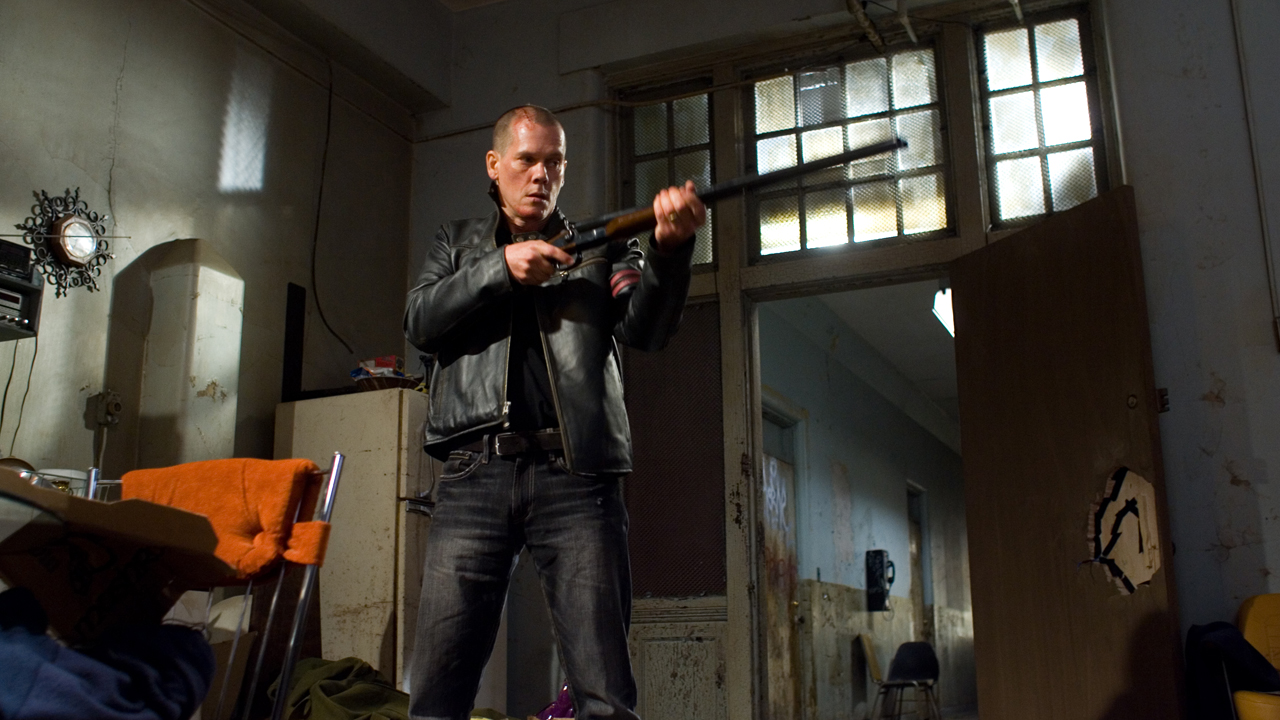
aside, Bacon over-eggs and hams up his performance to the point of a convoluted
food analogy. But back on track, Bacon does remind us that, when not gagging on
the corporate paycheque pimping mobile providers, he really can hold the
screen. When our man’s tooled up, shaven headed and shotgunning legs off with
the best of them, you’re there with him.
There is an air of
Wan getting a bit big for his boots post the blow-up reception of Saw,
lavishing the opening credits with the self-aggrandising ‘a James Wan film’
associated with the name-as-brad recognition of the Spielberg’s or the Nolan’s
(you’ve made one film, James…). Also peppering the film with intertextual Saw
references seems, well, masturbatory.
By the end, Death
Sentence does start to have notions above its station. The arch theme of
nihilistic violence begets violence is heavy-handedly shoved in our face. Yeah,
we’ve all seen The Last House on the Left, bet that was super fresh back in ’72
(or when Nietzsche penned that in the 19th Century for the book
learned ones of you). But then it farts away any pathos with something of a
cheap, redemptive ending. Like I said it’s not a great film but in all
sincerity, for that scene alone, it’s worth the price of admission*.
*My price of admission
was 80p


